 |
Craftsy Foldforming Video 2016 order link A workshop in a box. Over two hours of excellent, step by step video, the ability to review any lesson, go to any place in the video, ask questions of Charles and more. Please go to craftsy to join but then return here to buy the class. This makes a difference to the royalty Charles recieves. |
Charles Lewton-Brain invented fold-forming, a completely new way of forming sheet metal quickly into wonderful 3-D shapes and textures, most from single sheets of metal without any soldering. Fold-forming uses sheet material, folds it, works it and then unfolds it. Many schools and workshops teach and use fold-forming, and thousands of people use parts of the system in their work. There is a foldforming CDROM compilation of all the fold-forms. Alan Revere's comments on Lewton-Brain are here. A description of hammers and other tools for fold-forming is here. A tool list at the Ganoksin Project. Some step by step articles on making fold-forms are here. (Examples from the CDROM). Works by Lewton-Brain available to purchase are Here. The international Foldforming competition invites entries and shared examples of foldforms: http://www.foldforming.org/.
| Fold forming is a new system of metal
forming developed between 1980 and the present which is the concrete
result of a conceptual approach to metalsmithing that emphasizes
forming using the metals characteristics. Click on the pictures to see full size images
|
It is about following what the metal likes to do.
Rather than forcing form upon the material forms are to some extent
derived from the natural tendencies of the plasticity, ductility
and elasticity of the metal.
|
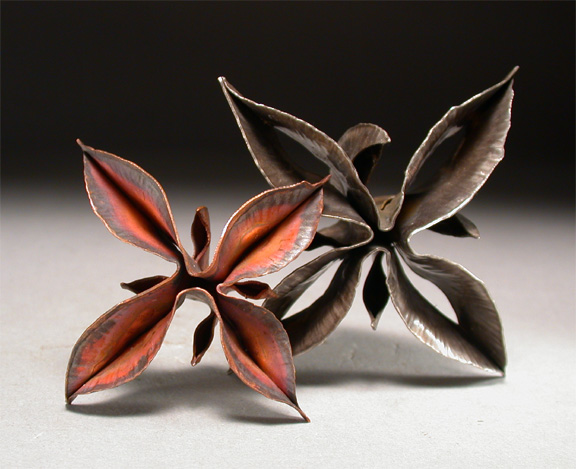 Sheared and formed star folds. 
Forged wedge T-fold (Good fold) |
|
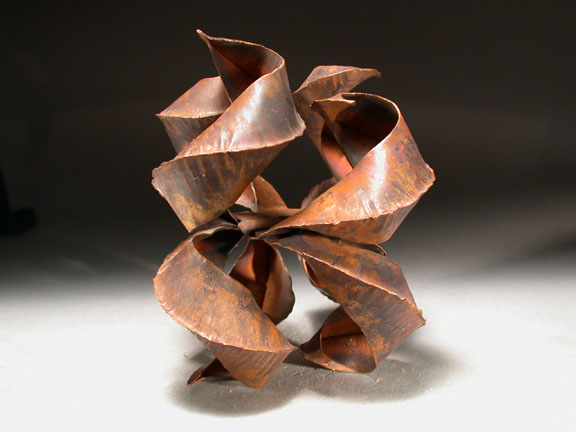 Woven fold, (Adams fold) |
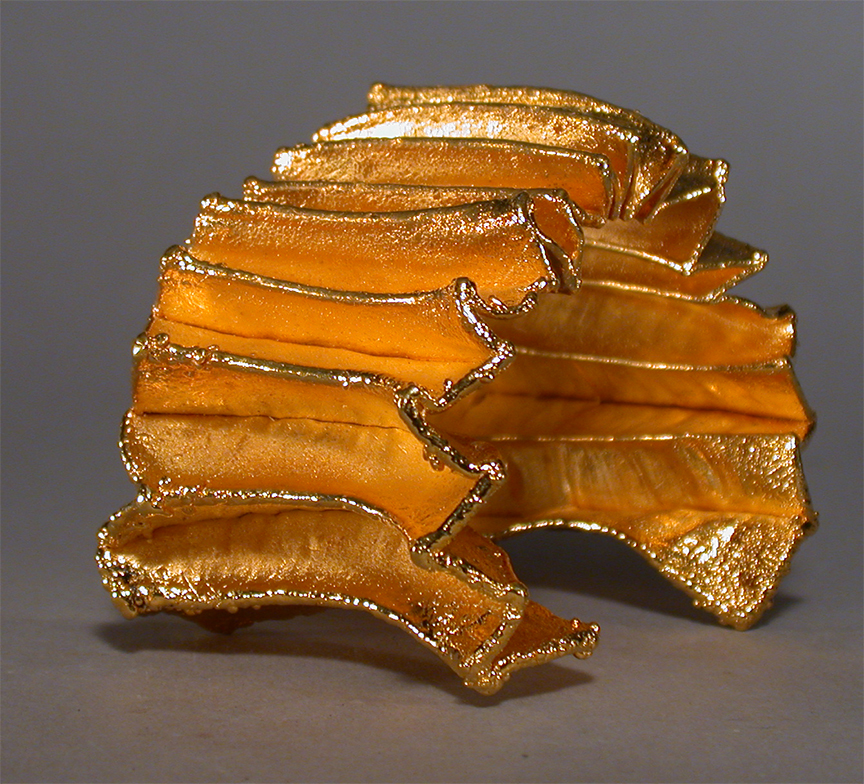
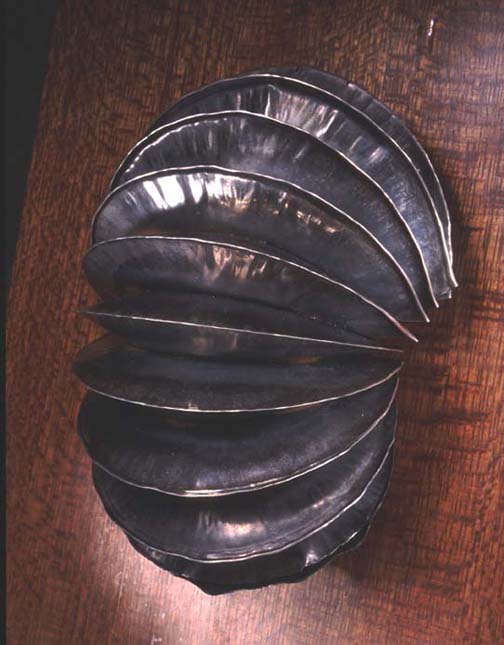
The British Museum Research Lab and the Rolex Awards for Enterprise, among others have certified that Fold-forming is new, and has not been done before in the history of metal working. |  A pile of pleated folds, each made from a single sheet. |
Because one does not fight the metal or force form upon it forming is extremely efficient and very rapid (many radical changes in cross section and surface can be made in 3-5 minutes). |
| Complex high relief forms are produced from single
sheets of metal often with a single annealing. |
|
These shapes resemble chased, constructed and soldered forms and can often not be arrived at in any other way in a comparable working time. The techniques may be used with most metals including aluminum, niobium, titanium, gold, silver, platinum and steel. As there is no soldering for high relief forms the surfaces are applicable for jewellery, holloware, enamelling, anodizing etc |
 Bowl form using T-folds and cross-folds to gather the metal. 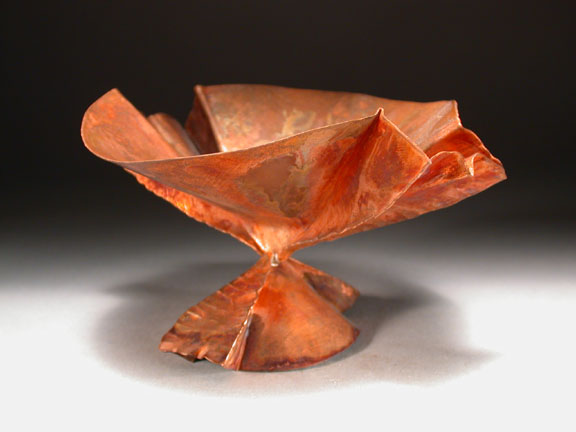
Bowl from two fold-formed discs soldered together. |
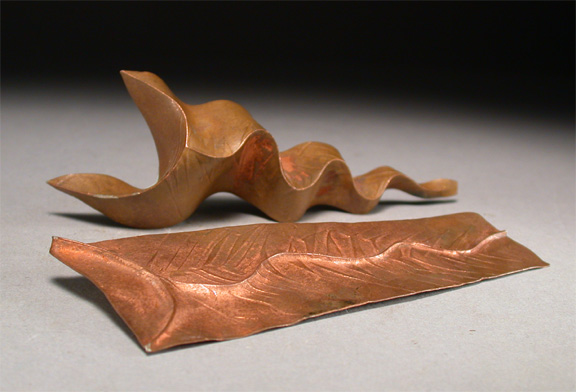 Scored and bent folds, two stages. One is scored and bent using separating discs and the other has been soldered after scoring and then flattened out. |
|
Categories include: |
And Woven Folds, Form and Shear, Pleated Folds, Folds derived from paper models |
|
|
These pieces are by
Charles Lewton-Brain 
This is copper sculpture forged from a single sheet, 2 feet high |
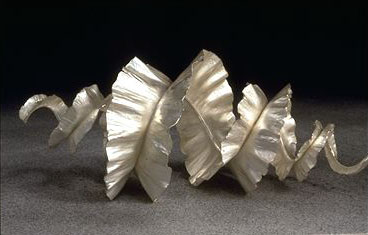 Sterling silver rueger fold "Tennessee fold Form", forged from a single sheet, 2.5 feet across. |
 "Dancing pin", moonstones, zircon, 18k gold doublee. Scored and bent. |
| "I believe in Beauty, and that ‘beauty’
is related to nature (form, surface texture, colour) for most humans.
I play with the tension between nature and structure." "Allowing the nature of the materials to do the work, deliberately building in some randomness, letting nature show in the work lends it a ‘beauty’ that I cannot easily reach by forcing form onto the material." "The poignancy of humans laying structure upon the universe, of our need to create and seek pattern intrigues me, and is part of the work." |
"The roles and relationships of human and nature, human and
perceived reality are of interest to me." "The marks of process are compositional elements. The effects
of chaos (nature) on systems is something I work with." |
|
|
| Making
Fold-Forms |
Making
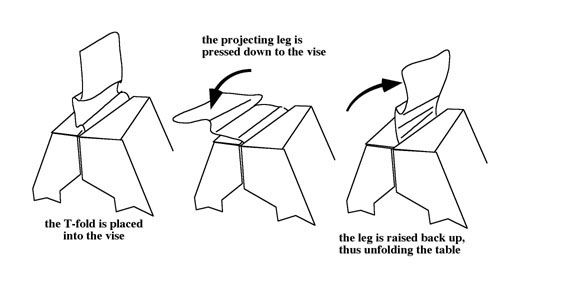
a T-Fold with a Table Insert |
How
to make a Rolled Fold Heistad Cup |
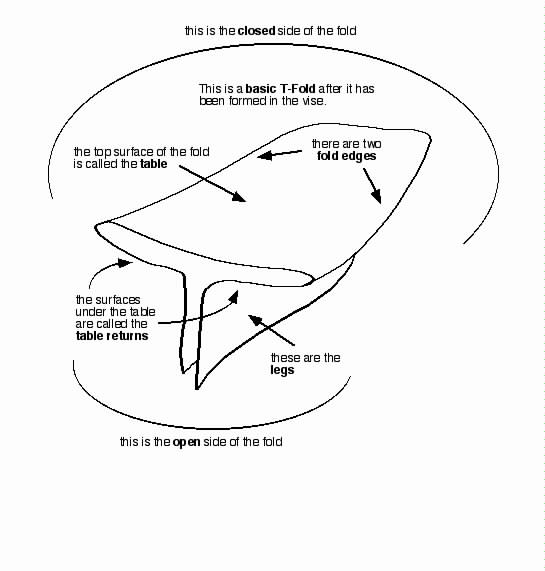
A basic T-fold diagram |
|
Some Youtube links Don Paul
demo |
 |




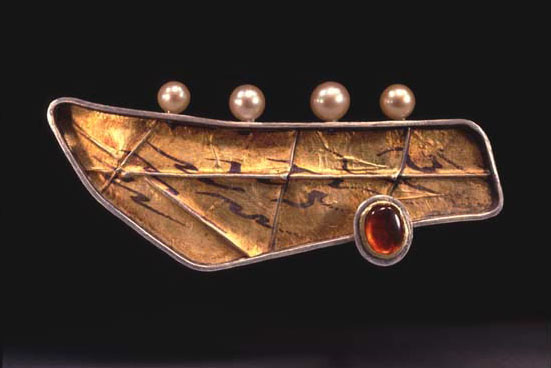
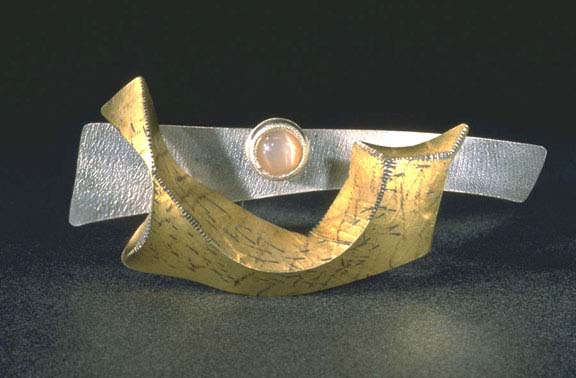
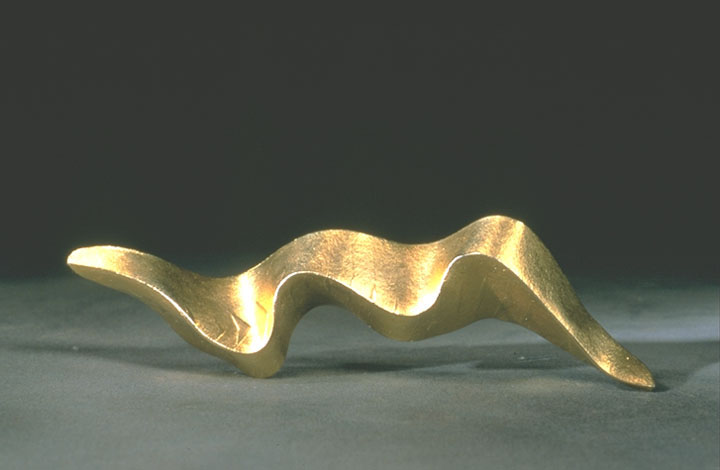
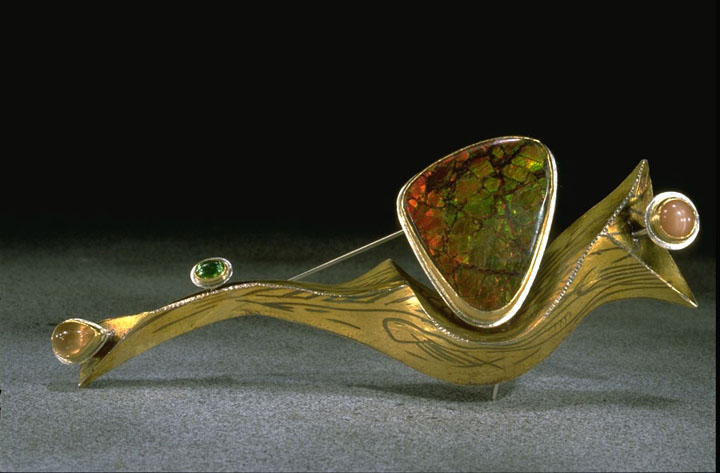

Fold forms while they are lovely as finished products are often at their best
as a starting point or component of more complex pieces. An example of
this might be slicing up a fold form, manipulating the elements and re-soldering,
or using it as an element in a constructed structure. By chasing on air
in a T-folding technique hours may be cut from a chasing procedure. Fold
forming also offers a major new series of procedures for production work.
A number of production shops now use fold forming as part of their working
vocabulary. There are dozens of schools worldwide that teach parts of foldforming in their curriculum. Thousands of people use the procedures in their work, and to make a living.
Fold forms themselves have developed a great deal since 1985. There are
now a number of discrete avenues of research available involving folding,
working and unfolding. Each avenue provides great numbers of individual
'marks' or process elements that are distinct enough to be worthy of naming.
These are arrived at by following specific procedures, recipes that produce
given results. By making a number of fold forms and experimenting an understanding
of process in metal forming is achieved more rapidly than in conventional
working methods.
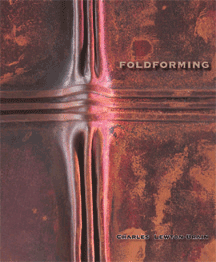
"Foldforming" book by Charles Lewton-Brain
PDF extracts: Foldforming Book
Press Release/ Chapter:
An Overview of the Folds / Table of Contents / Sample / Buy the book. If you already own the Foldforming
CDROM and want an update click
here
Foldforming slide shows and videos on Youtube
Foldforming Competition 2012 video by Sue Lacy
Foldforming Competition 2013 video by Sue Lacy
Foldforming Competition 2014 video by Sue Lacy
Foldforming Competition 2015 video by Sue Lacy
Foldforming Competittion 2016 video by Sue Lacy
Charles Lewton-Brain's Articles
at the Ganoksin Project
Gallery Links
for Lewton-Brain's Artwork and Goldsmithing / Wall pieces from 2009 / Wall pieces from 2008/ CraftCast Interview 09 / Hawk
Interview 07 / Slide Show of Cage Series Work / "River Trip" Project Cage Series Work / PDF of Lewton-Brain's CV 2009 / Blacksmit'Her Radio Interview 2016
Search the Ganoksin Web Site
for Jewelry information